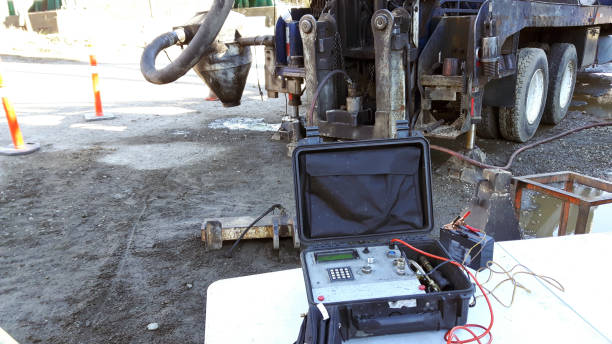
The construction industry continually advances, and with it, the methods employed to ensure the integrity and safety of foundational structures such as piles. Crosshole pile testing, specifically through the use of crosshole sonic logging equipment, is a sophisticated nondestructive testing technique used to assess the quality and integrity of concrete piles. This method is instrumental in identifying potential defects such as voids, cracks, or inclusions that may have formed during the pile construction process. Understanding this testing process is crucial for engineers and construction professionals who strive to ensure the reliability and longevity of structures.
The Basics of Crosshole Pile Testing
What is Crosshole Pile Testing?
Crosshole pile testing is a method used to evaluate the internal integrity of concrete piles. It involves the use of crosshole ultrasonic testing technology to transmit ultrasonic waves through the concrete. By measuring the time it takes for these waves to travel between multiple access tubes embedded within the pile, the test can reveal inconsistencies that may indicate defects.
Key Components of the Testing Process
The crosshole pile test procedure relies on several critical components to successfully assess pile integrity:
- Access Tubes: Installed within the pile before pouring concrete, these act as conduits for transmitting and receiving ultrasonic waves.
- Transmitter and Receiver Probes: These are lowered into the access tubes to emit and detect ultrasonic signals.
- Data Acquisition System: Collects and analyzes the travel time of the ultrasonic waves to identify anomalies.
The Procedure of Crosshole Pile Testing
Preparation and Setup
Before conducting the test, access tubes are installed in pairs or multiples, depending on the pile’s diameter. These tubes should be parallel and evenly spaced to cover the entire cross-section of the pile. The tubes must be filled with water to facilitate accurate transmission of ultrasonic waves.
Testing and Data Collection
The testing process involves the following steps:
- Lowering the transmitter and receiver probes into adjacent tubes at the same depth.
- Transmitting ultrasonic signals from the transmitter and capturing them with the receiver.
- Recording the time taken for the signals to travel between the tubes, which is crucial for determining pile integrity.
The results are analyzed using CSL pile test equipment to identify potential defects. Variations in signal travel time may indicate the presence of voids or other anomalies within the concrete.
Benefits and Applications
Advantages of Crosshole Pile Testing
This testing method offers several benefits, making it a preferred choice in the construction industry:
- Non-destructive Approach: Evaluates pile integrity without causing damage to the structure.
- Detailed Analysis: Provides a comprehensive view of the pile’s internal condition.
- Early Detection: Identifies defects early in the construction process, allowing for timely remediation.
Applications in Construction
Crosshole pile testing is widely used in projects requiring deep foundations, such as bridges, high-rise buildings, and industrial facilities. Ensuring the quality and durability of piles through crosshole pile test techniques is essential in maintaining the structural integrity of these critical infrastructures.
Conclusion
Crosshole pile testing is a vital part of modern construction practices, offering reliable insights into the integrity of concrete piles. By utilizing advanced technologies such as crosshole sonic logging equipment, engineers can ensure that foundational structures meet safety and performance standards. Understanding this process empowers construction professionals to make informed decisions and uphold the highest standards of quality in their projects.