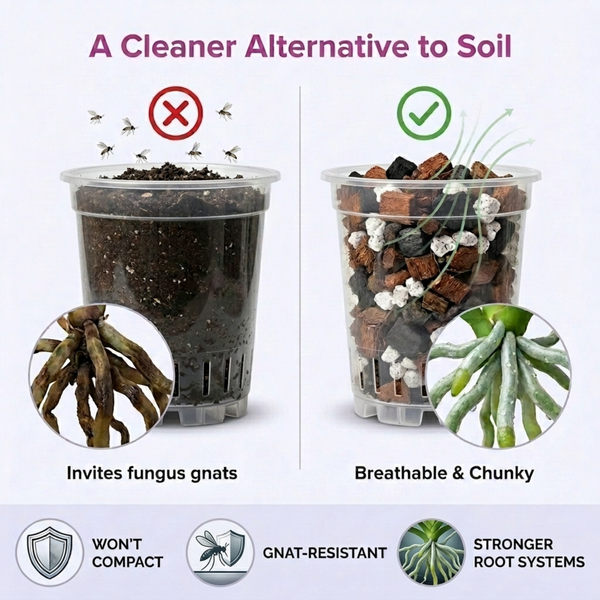
Orchids are a beloved choice for plant enthusiasts, known for their captivating blooms and exotic appearance. However, nurturing these elegant plants requires special attention, particularly when it comes to choosing the right potting mix. The uniqueness of orchid soil lies in its ability to cater to their specific growth needs. This guide delves into the essentials of selecting the best orchid potting mix, ensuring your orchids not only survive but thrive and bloom beautifully.
Understanding Orchid Needs
Orchids, unlike many other houseplants, are epiphytes. This means they grow naturally on other plants rather than in soil. Consequently, the choice of orchid potting soil is crucial to mimic their natural habitat. Here are the fundamental needs of orchids:
- Good drainage to prevent root rot.
- Aeration for the roots.
- Minimal soil compaction to allow air circulation.
- Moisture retention without waterlogging.
Components of a Quality Orchid Potting Mix
Bark
Bark is a primary component of many orchid pot mixtures. It provides:
- Excellent drainage.
- Good airflow.
- A natural base that mimics the orchid’s native environment.
Sphagnum Moss
Sphagnum moss is renowned for its water-retention capabilities. It helps in:
- Maintaining moisture without waterlogging.
- Providing a soft cushion for the roots.
Perlite
Incorporating perlite into the orchid potting medium enhances:
- Drainage and aeration.
- Lightness of the potting mix.
Charcoal
Charcoal is beneficial for:
- Absorbing impurities from water.
- Preventing the growth of harmful bacteria.
Choosing the Right Orchid Potting Mix
Selecting the appropriate pot mix for orchids involves understanding the specific needs of your orchid type. Consider the following:
- Phalaenopsis orchids tend to prefer a mix with more bark and less moisture retention.
- Cattleya orchids benefit from a mix with a balance of bark and perlite.
- For Paphiopedilum orchids, a mix with more moss may be beneficial for increased moisture.
Repotting Your Orchid
Repotting is a crucial aspect of orchid care. It ensures that the orchid plant potting mix remains fresh and free from compaction. Here are some tips:
- Repot every 1-2 years, or when the mix starts to break down.
- Choose a pot that allows for adequate drainage.
- Be gentle with the roots when repotting to avoid damage.
Conclusion
The path to thriving orchids is paved with attention to their unique potting mix requirements. By selecting a suitable orchid potting mix, enthusiasts can create an environment that supports healthy growth and vibrant blooms. Each component plays a critical role in replicating the orchids’ natural habitat, ensuring they receive the necessary nutrients and conditions to flourish. With the right knowledge and materials, any orchid lover can enjoy the beauty and satisfaction of healthy, blooming orchids.